My role
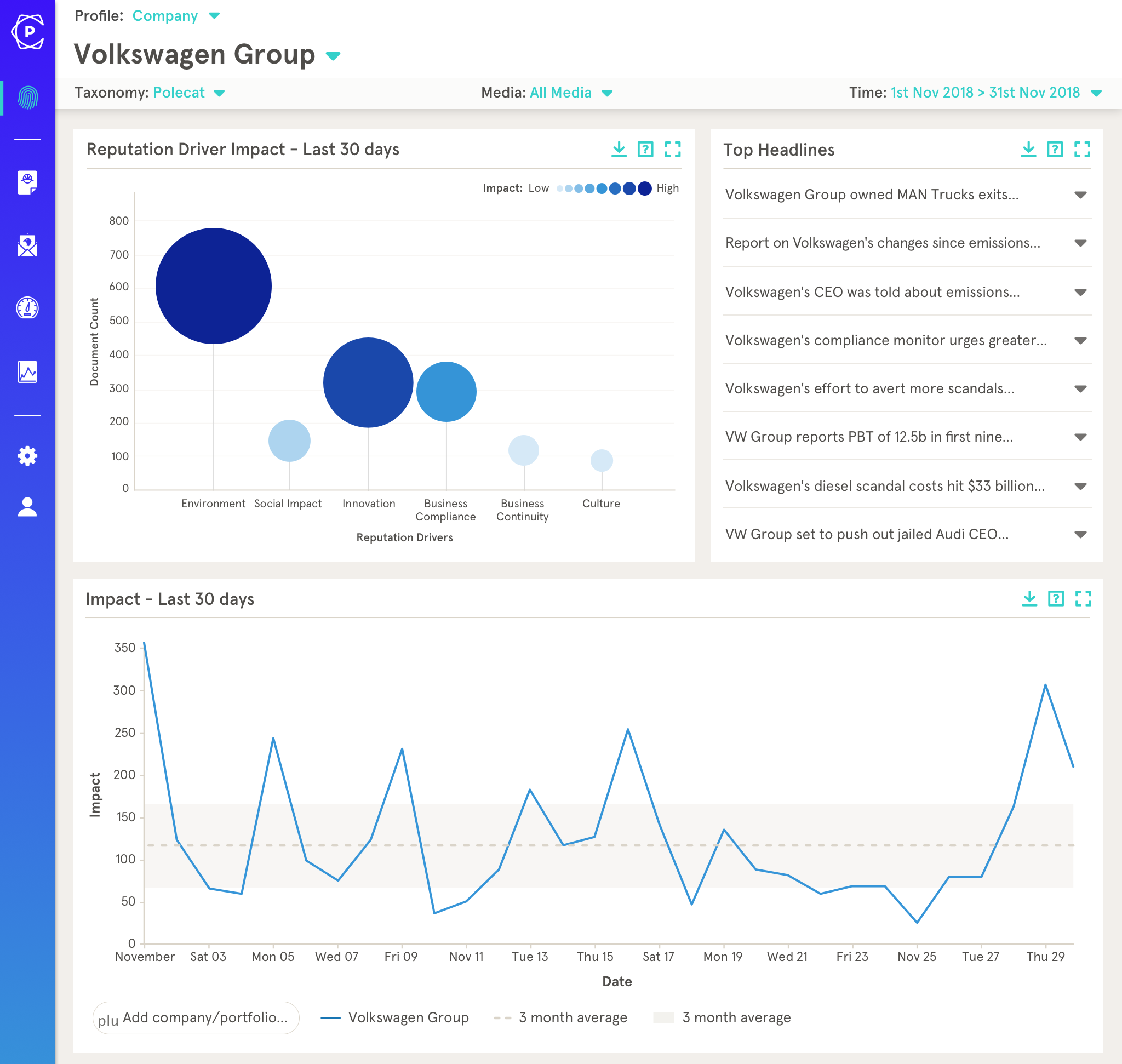
I was Head of UX Design at Polecat, responsible for improving the user experience across RepVault and the wider Polecat Hub.
Polecat Intelligence is a software-as-a-service company specialising in reputation risk analysis. I improved the user experience across RepVault and the wider Polecat Hub, shaping how clients access, interpret and act on complex reputation data.
My responsibilities included:
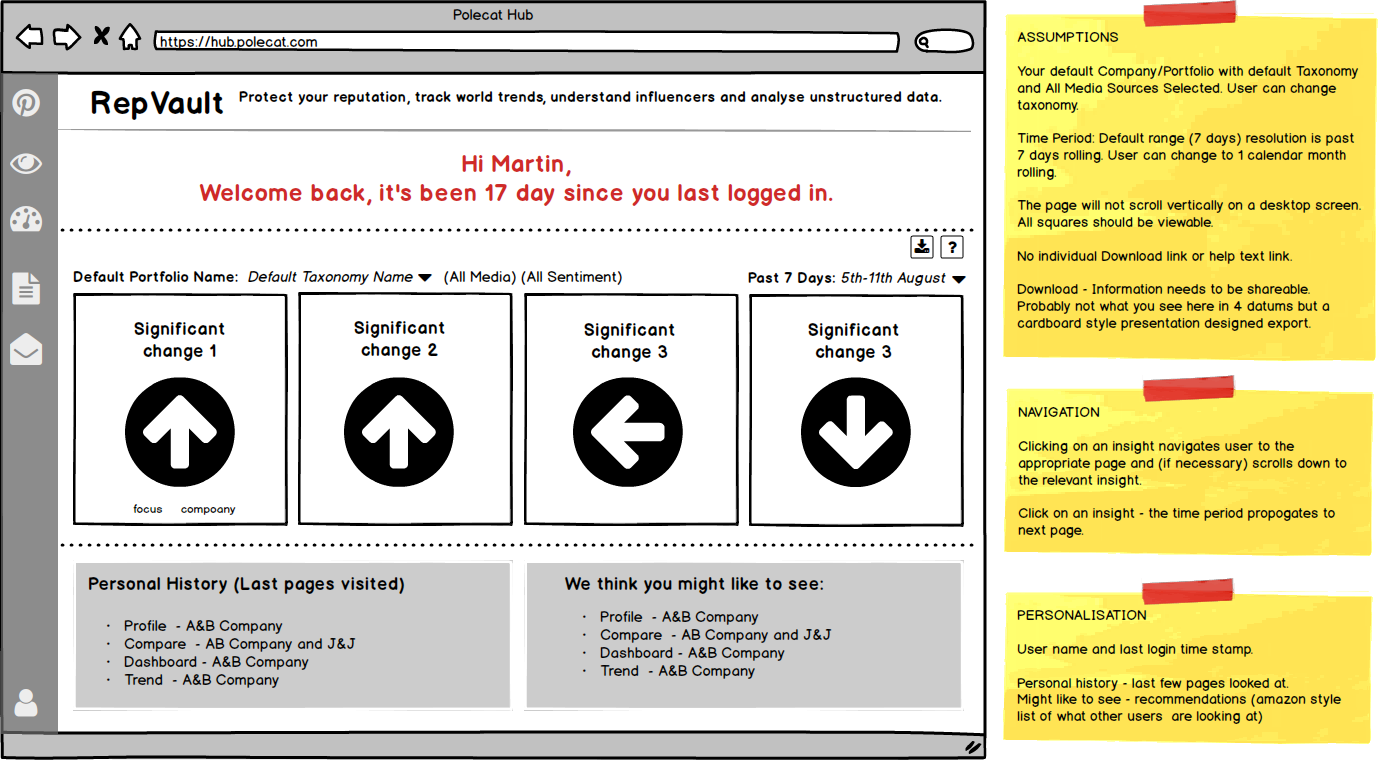
- Concept development from initial sketches through to high-fidelity designs
- Designing and running structured user testing sessions
- Developing a UX strategy aligned with measurable product usage
- Presenting research findings and design direction to the Product Owner
Research & testing approach
Because the homepage needed to communicate complex reputation insight at a glance, we ran moderated research sessions to understand what users considered “high-value” information.
Participants
Six Polecat employees in user-centred roles, including customer service managers.
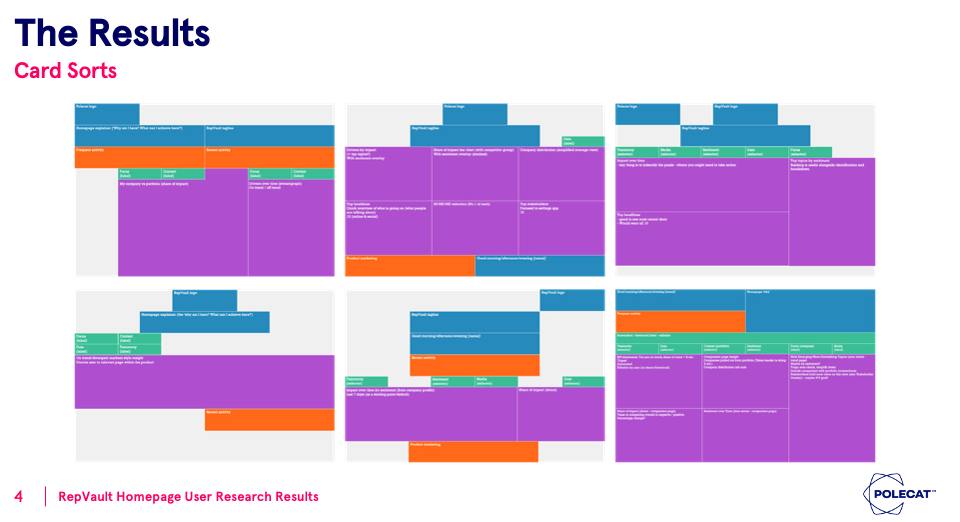
Modified card sort
Participants assembled predefined insight components within a structured grid. This exercise revealed priorities, trade-offs and expectations for a high-level reputation overview.
Key findings
- Minimal scrolling: The homepage should feel immediate and high-level.
- Three core insights maximum: More would dilute clarity.
- Share of Impact & key metrics: Consistently ranked as high-value data points.
- Sentiment analysis: Considered essential for contextual understanding.
- Time comparison: Users wanted visible change over time to provide baseline context.
- Clear taxonomy & date controls: Required for filtering and clarity.
Outcome
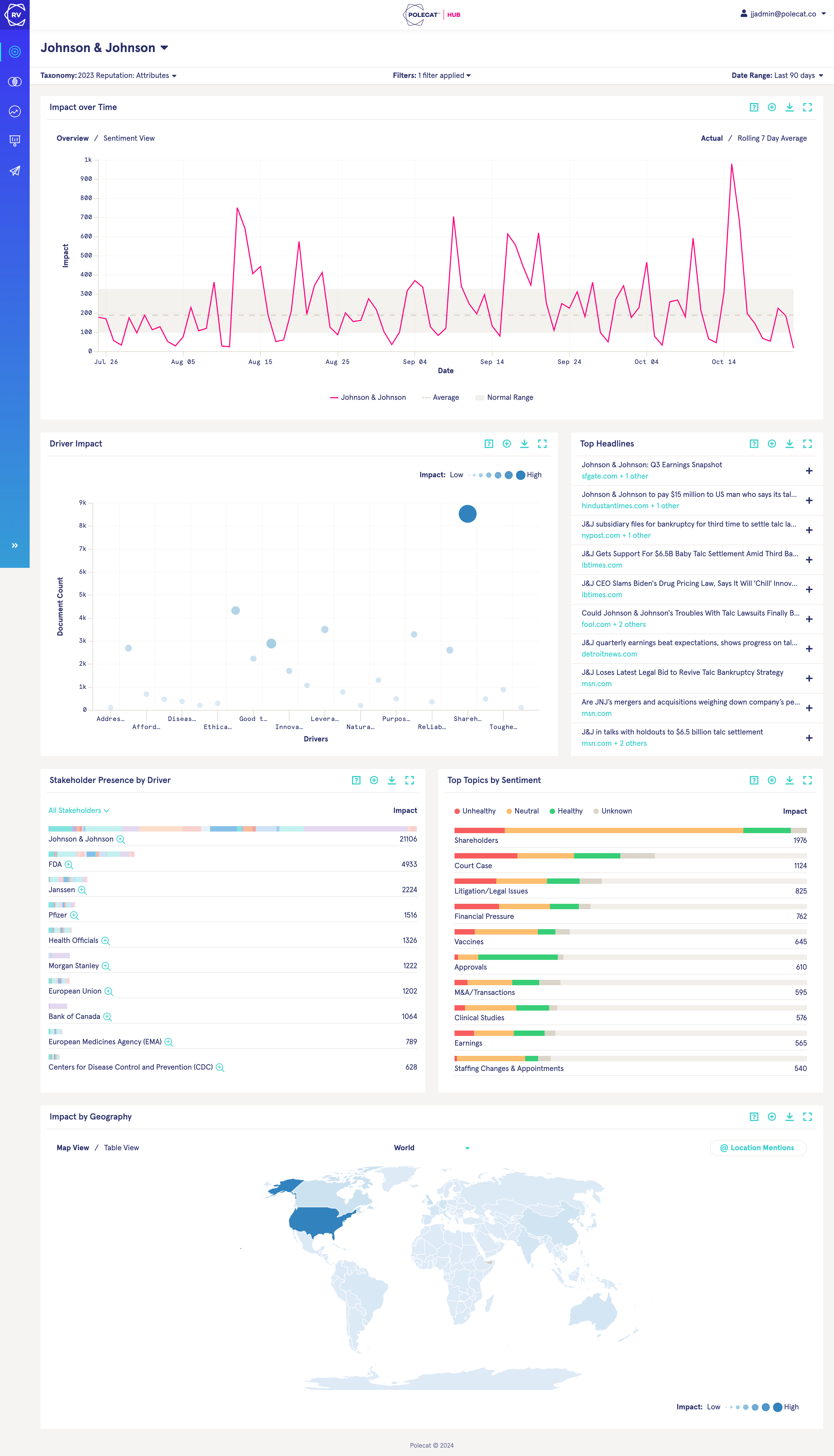
The redesigned homepage shifted from a static navigation screen to an insight-led dashboard experience. Users were able to access high-value metrics more quickly and navigate efficiently to deeper analysis tools.
Post-implementation metrics showed stronger click-through patterns and reduced dwell time on the homepage — indicating users were finding what they needed faster and progressing through their journey more efficiently.
To read more about the card sorting and results view the UX presentation.pdf.
Explore related work on the Polecat Hub platform.